In this post we are providing you an overview of Classification of Lightning Protection Systems (LPS). Lightning Protection Systems (LPS) are categorized into four classes (I, II, III, and IV). This classification is based on the level of lightning protection required. These classes are defined in IEC 62305 (Protection Against Lightning). The higher the class…
Category: Extra High Voltage EHV Substation Design
Synchronous Condenser, STATCOM, STATCOM with BESS, and SVC
In modern power systems, maintaining voltage stability and reactive power balance is becoming more challenging — especially with the increasing share of renewable energy.Several technologies are used to provide reactive power support and grid stability. The most common ones are: Each of these solutions has its own advantages, depending on the type of system and…
How do you select cable size for a motor or load
Selecting the right cable size is important for both safety and efficiency. An undersized cable may overheat, cause voltage drops, or even lead to fire hazards. An oversized cable increases cost unnecessarily. Cable size is selected based on the following key factors: Current Carrying Capacity (Ampacity): The cable must handle the full-load current of the…
Difference between MCB, MCCB, ACB, and VCB
MCB, MCCB, ACB, and VCB are most common types of Circuit breakers. Circuit breakers are essential devices that we use to protect electrical systems from faults and overloads. They come in different types depending on the application, voltage level, and breaking capacity. MCB (Miniature Circuit Breaker) MCCB (Moulded Case Circuit Breaker): ACB (Air Circuit Breaker):…
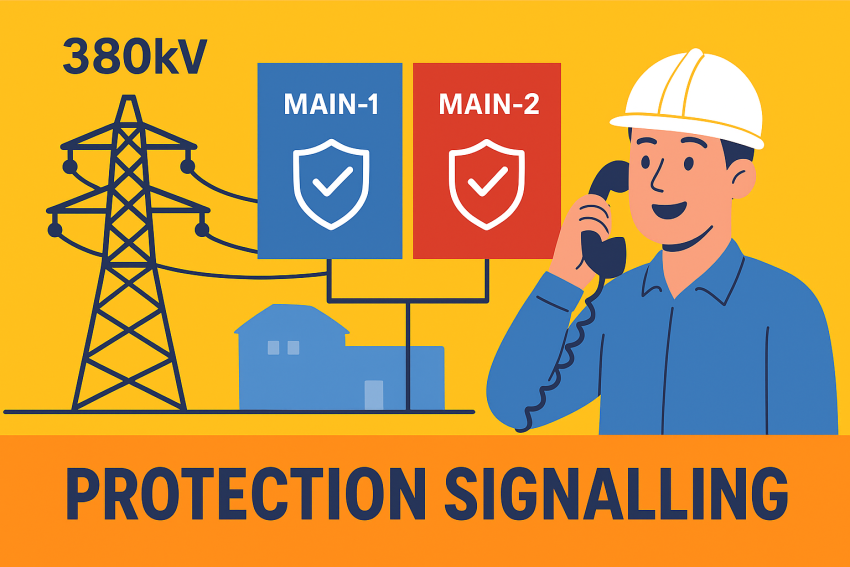
Feeder Protection Signaling
High-voltage power systems like 380kV transmission lines are the backbone of modern grids. They carry electricity over long distances, and any fault (like a short circuit or flashover) the system must detect it instantly and isolate it to protect equipment and keep the grid stable. That’s where feeder protection signaling comes in. In this post,…
SEC Standards Update: New vs Old
Saudi Electricity Company (SEC) has issued new standards that mayl soon replace the old ones. These updated codes are essential for engineers, consultants, and contractors working on substations, OHTL (Overhead Transmission Lines), and power system projects in Saudi Arabia. Key Points to Remember: Our Most Read Posts In the old SEC standards, the first letter…
380kV Gas-Insulated Switchgear (GIS)
In this post we will provide you an overview of 380kV Gas-Insulated Switchgear (GIS). This is our 3rd post that is part of Extra High Voltage EHV Substation Design & 380kV Substation Design. If you are new on our website it is recommended to read first the below Posts What is Switchgear? Switchgear is a general term…
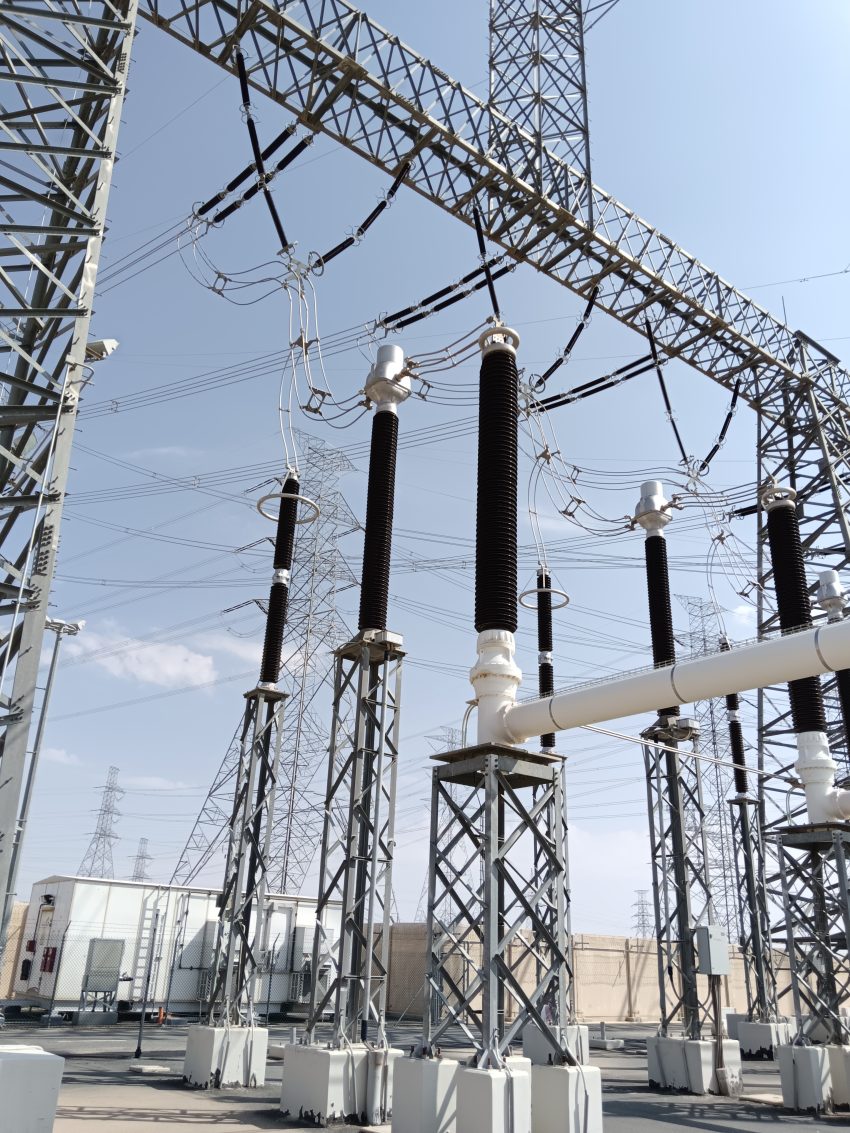
380kV Gantries & Gantry Equipment
380kV Gantries & Gantry Equipment is our first post that is a part of Substation Layout Drawing & Explanation each equipment in a 380kV BSP. Gantries are the tall steel structures at the extreme ends of the yard that serve as termination points for overhead transmission lines (OHTLs) entering the substation at 380kV. In this…
Inside a 380kV BSP: Overall Layout Drawing Explained
In today’s rapidly growing power networks, Bulk Supply Points (BSPs) play a vital role in ensuring reliable electricity transmission and distribution. A BSP is essentially the bridge between high-voltage transmission lines (380kV in Saudi Arabia) and the sub-transmission network (132kV) that feeds urban centers and industrial zones. While single-line diagrams (SLDs) show the electrical connections,…
Power Transformer Testing Overview
In this post we present you Power Transformer Testing Overview as per IS:2026 (Part I). Power transformers are critical components in the electrical power system, and their reliability is ensured through rigorous testing as specified in IS:2026 (Part I) – Power Transformers: General Requirements. These tests are categorized into Type Tests, Routine Tests, and Special…