Electrical engineering is entering its most transformative era in decades. While the last few decades were dominated by advancements in software, IT, and telecommunications, the coming years will be defined by energy innovation. As the global demand for reliable, sustainable, and intelligent power systems accelerates, electrical engineers will be at the heart of this transition….
Category: Interview Preparation
Role of Synchronous Condensers in Modern Power Systems (2025)
As power systems around the world transition to renewable energy sources, grid stability has become one of the biggest challenges. Traditional generators provided inertia, reactive power support, and fault current contribution. With renewables like solar PV and wind (which use power electronics), these services are reduced. That’s where synchronous condensers come into play—an old technology…
SEC Standards Update: New vs Old
Saudi Electricity Company (SEC) has issued new standards that mayl soon replace the old ones. These updated codes are essential for engineers, consultants, and contractors working on substations, OHTL (Overhead Transmission Lines), and power system projects in Saudi Arabia. Key Points to Remember: Our Most Read Posts In the old SEC standards, the first letter…
380kV Gas-Insulated Switchgear (GIS)
In this post we will provide you an overview of 380kV Gas-Insulated Switchgear (GIS). This is our 3rd post that is part of Extra High Voltage EHV Substation Design & 380kV Substation Design. If you are new on our website it is recommended to read first the below Posts What is Switchgear? Switchgear is a general term…
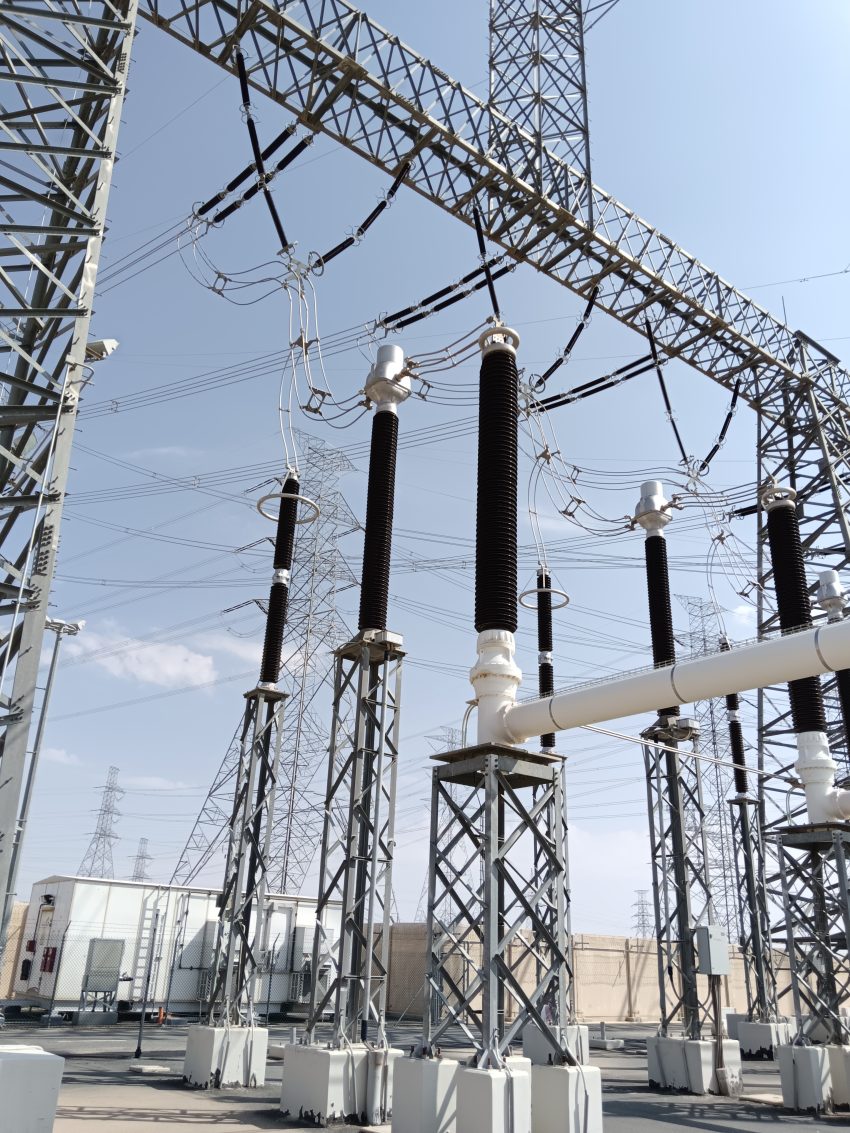
380kV Gantries & Gantry Equipment
380kV Gantries & Gantry Equipment is our first post that is a part of Substation Layout Drawing & Explanation each equipment in a 380kV BSP. Gantries are the tall steel structures at the extreme ends of the yard that serve as termination points for overhead transmission lines (OHTLs) entering the substation at 380kV. In this…
Inside a 380kV BSP: Overall Layout Drawing Explained
In today’s rapidly growing power networks, Bulk Supply Points (BSPs) play a vital role in ensuring reliable electricity transmission and distribution. A BSP is essentially the bridge between high-voltage transmission lines (380kV in Saudi Arabia) and the sub-transmission network (132kV) that feeds urban centers and industrial zones. While single-line diagrams (SLDs) show the electrical connections,…
Power Transformer Testing Overview
In this post we present you Power Transformer Testing Overview as per IS:2026 (Part I). Power transformers are critical components in the electrical power system, and their reliability is ensured through rigorous testing as specified in IS:2026 (Part I) – Power Transformers: General Requirements. These tests are categorized into Type Tests, Routine Tests, and Special…
Vector Group of Transformers
Vector Group of Transformers, indicates the phase relationship also called phase difference (angle shift) between the High Voltage and Low Voltage windings. It tells you how the windings are connected (star or delta) and the phase displacement between them. This is important for ensuring proper synchronization and operation in power systems. This is our 6th post that…
Sag templates & Curves
Sag templates are a critical tool in the design and construction of transmission lines. We usually use these to determine the vertical position of conductors (and ground wires) under specified design conditions, ensuring that the transmission line provides adequate clearance to the ground and other facilities. Below is a detailed explanation of sag templates based…
Most Common Electrical engineering interview questions
in this post we are going to explain most Common Electrical engineering interview questions. The question here will focus on Overhead Power Transmission Lines. Following are some of the important and most Common Electrical engineering interview questions Why use high-voltage instead of low Voltage for transmission? The best answer to that question is that high-voltage…